Willow Creek Enforces Egalitarianism: Policy Requires All Staff and New Members to Joyfully Affirm Egalitarian Views

Wayne Grudem
 

We are thankful for the remarkable blessing of God on the evangelistic and discipleship work of Willow Creek Community Church in Illinois. But we regret to report that Willow Creek, one of the nation's largest and most influential churches, has begun to require that all new members and all church staff agree with an egalitarian policy on women in ministry. Such policies will undoubtedly influence several hundred churches in the Willow Creek Association, and thousands of other churches around the world that look to Willow Creek for leadership and are influenced by its conferences. The arguments used by Willow Creek to defend its position are representative of egalitarian arguments in general. Therefore, if their case is found wanting in the light of Scripture, many similar positions would likewise topple.

The Willow Creek Position

Complementarians Excluded From Membership:

Regarding membership at Willow Creek, the church distributes a four-page handout, "The Elders' Response to the Most Frequently Asked Questions About Membership at Willow Creek." On page 3 it says: While we respect the right of individuals to hold a different position, we ask that Participating Members of Willow Creek minimally be able to affirm with integrity the following:

  • that they can joyfully sit under the teaching of women teachers at Willow Creek
  • that they can joyfully submit to the leadership of women in various leadership positions at Willow Creek
  • that they will refrain from promoting personal views in ways that would be divisive or disruptive.

This means that members now have to hold an egalitarian position-not even hesitantly or with reservations, but strongly enough to be joyful in living out a commitment to it. If people held another view-for example, if they thought it was contrary to Scripture for women to teach or have authority over an entire church-then they would probably think it a violation of their consciences to "affirm with integrity" that they could "joyfully submit" to and support something they thought to be wrong.

As a detailed defense of this position, we can now examine an eight-page document, "Women and Men in Ministry at Willow Creek Community Church." This is a draft document (dated 1/29/96) that has been "under consideration" for well over a year by people at various leadership levels of the church.

"Further Study" Includes Only One Position:

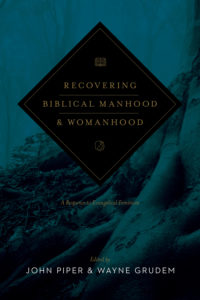
The position paper says the church is committed "to provide opportunity for ministry based on giftedness and character, without regard to gender" (p.4). It lists eight books "for further study and more complete discussion of this issue," including egalitarian writings by Gilbert Bilezikian (a founding elder of Willow Creek Church), Stanley Grenz, Gretchen Hull, Craig Keener, Aida Spencer, and Mary Stewart Van Leeuwen. We are disappointed to see that "more complete discussion" of the issue only includes one side of the discussion, because none of the eight books listed represents a complementarian position.It is noteworthy that our book Recovering Biblical Manhood and Womanhood, which was selected by readers of Christianity Today as "the most influential book in the evangelical world" in 1992, and which is now in its eighth printing, was not mentioned among the books to read for a "more complete discussion." Moreover, the most comprehensive scholarly investigation of 1 Timothy 2:9-15 that has ever been published, Women in the Church: A Fresh Analysis of 1 Timothy 2:9-15, edited by Andreas Köstenberger, Thomas Schreiner, and H. Scott Baldwin (Baker, 1995), is not mentioned.

Cbmw Books Banned At Willow Creek:

The CBMW-sponsored book Recovering Biblical Manhood and Womanhood is not allowed to be sold in the Willow Creek bookstore. As reported in World, March 29, 1997, the bookstore manager says the book is "deemed not appropriate." In a related incident, Dr. Bruce Ware, Chairman of the Systematic Theology department at Trinity Evangelical Divinity School, was teaching a Trinity extension class at Willow Creek in the spring of 1997, and had to sell one textbook, Systematic Theology by Wayne Grudem, out of the trunk of his car, because Willow Creek would not allow it to be sold in their bookstore, even when it was a text for a Trinity class. This is because 19 of the 1262 pages (less than 2% of the book) take a complementarian position on manhood and womanhood in marriage and the church.

Interpretations Of Biblical Texts:

With regard to Biblical texts that are crucial to this discussion, the Willow Creek position paper adopts several common egalitarian interpretations, such as the following:

(1) ADAM CREATED FIRST: Regarding the fact that Adam was created before Eve, "there is nothing in the text to indicate that man's being created before woman is meant to imply his greater status or priority...one could just as easily argue that the ‘order of creation' proves the superiority of women..." (p. 3).

(2) ADAM NAMING EVE: Regarding the fact that Adam named Eve, "He did not give her the name Eve until after the fall (Gen. 3:20), when the curse had taken effect" (p. 3).

(3) ALL MEN APOSTLES: Regarding the apostles, "It is true that in choosing the Twelve Jesus chose an all-male group. However, it may well be that this was intended as an appropriate accommodation to the culture of this day.... all of the Twelve were Jewish but that was not intended to signal that church leadership is to be restricted to those of Jewish ancestry in our day" (p. 4).

(4) JUNIAS/ JUNIA AS APOSTLE: In Romans 16:7, "The name Junia has a feminine ending, and thus refers to a woman who...Paul numbers among the apostles" (p. 5).

(5) PROPHECY EQUALS TEACHING: In 1 Corinthians 11, "Paul here is expressly affirming that women must pray and prophesy in public (verse 5). The verb to prophesy refers to ‘public teaching, admonishing, or comforting; delivering God's message to the congregation'" (p. 5).

(6) "HEAD" MEANS "SOURCE": Regarding the meaning of kephalē, "head," where the Bible says "the husband is the head of the wife" (Eph. 5:23): "There is a fair amount of evidence that...contemporaries of Paul most often took it to refer to the origin or source of something" (p. 5).

(7) MUTUAL SUBMISSION WITHIN THE TRINITY: Regarding the Trinity as a pattern for relationships in marriage: "Submission within the Trinity is ultimately mutual submission, not one-way submission" (p. 6).

(8) UNEDUCATED WOMEN IN CORINTH: In 1 Corinthians 14:34-35, "Paul's concern is focused on the disruption of learning or worship by the asking of questions. This would naturally tend to involve women since by and large they lacked education. They would have little background information about the Bible, and would therefore be filled with questions as they began to receive teaching" (p. 6).

(9) UNTRAINED WOMEN IN EPHESUS: Paul's command that women not "teach or have authority over a man" in 1 Timothy 2:12 is interpreted as "a warning to the women of Ephesus that they were not to abuse their new-found privilege of learning by trying to usurp the teacher's place (correcting and so on) before they even understood what they were trying to learn" (p. 7).

(10) "HAVE AUTHORITY" MEANS "DOMINEER": The verb authentein in 1 Timothy 2:12 "helps show us what Paul is warning against-not just teaching, but teaching that seeks to dominate and control" (p. 7).

Complementarians Excluded From Leadership:

The document concludes, "We believe that God has gifted both men and women for all forms of ministry and that they are to serve on the basis of giftedness and not gender... because of our commitment to both women and men in ministry, there is a certain level of consensus needed on this issue for those in leadership at Willow Creek. To have people in leadership positions at Willow who cannot, in good conscience, support women in teaching or leadership ministry here would create a situation where key people in ministry have their ministries undermined" (p. 8, italics added). As explained above, this requirement is now imposed on new members as well. This means that people like Augustine, Calvin, Luther, Wesley, Whitefield, Spurgeon, and thousands of other leaders in the history of the church could not join Willow Creek, were they alive today. And it means that the millions of evangelicals today who still believe the Bible requires that "some governing and teaching roles within the church are restricted to men" (Danvers Statement, Affirmation 6) cannot join Willow Creek.

Readers of CBMWNEWS should decide for themselves whether they agree with these interpretations or not, because in many ways the Willow Creek statement is an excellent summary of egalitarianism, and if other churches adopt egalitarianism, these will likely be the positions they take.

Why We Differ With The Willow Creek Position On This Issue

While detailed responses to these claims may be found in our literature (especially our book Recovering Biblical Manhood and Womanhood, and our booklet 50 Crucial Questions About Manhood and Womanhood), we can indicate briefly in this article where we differ with the Willow Creek position:

(1) ADAM CREATED FIRST: We do not agree that "there is nothing in the text to indicate that man's being created before woman is meant to imply his greater status or priority." We do not agree because the Apostle Paul took the statement in Genesis 2 that "Adam was formed first, then Eve" (1 Tim. 2:13) as a reason why women should not "teach or have authority over men" (1 Tim. 2:12) in the assembled church. If we believe that the whole Bible is God's Word for us, then we have to say that the New Testament's own interpretations of Genesis 2 are correct, and Adam's being created first indicates a greater authority for him as a man.

(2) ADAM NAMING EVE: We agree of course that Adam gave his wife the name "Eve" after the fall, but we do not agree that that was the first time Adam gave her a name. Before the fall, Adam said, "She shall be called Woman" (Gen. 2:23). The verb for "called" (Hebrew qārā˒) is the "naming verb" used throughout Genesis 1 and 2: it is used when God calls the light Day and the darkness Night (1:5); when he calls the firmament Heaven (1:8); when he calls the dry land Earth and the waters Seas (1:10); and when Adam calls each animal by its own name (2:19-20, in the very context that prepares the way for the creation of the woman). Thus, when Adam said, "She shall be called Woman" (2:23) he was most definitely naming her, and thereby indicating that he had an authority and leadership role with respect to her.

(3) ALL MEN APOSTLES: We do not agree that Jesus chose only men as his twelve apostles "as an appropriate accommodation to the culture of this day." Jesus never hesitated to correct his culture when issues of right and wrong were at stake. He chose twelve Jewish apostles because in God's wise plan, the church began among the Jews, and it was all Jewish at the beginning-there were no Gentiles in it, but there were many women. If Jesus had wanted to demonstrate that women had full access to all leadership roles in the church, he could easily have appointed six men and six women as apostles, but he did not. The highest human authority and highest leadership responsibilities in the church, under Jesus Christ himself, belong for all eternity not to women and men alike but to twelve apostles who are men, and these men will sit on twelve thrones judging the twelve tribes of Israel (Matt. 19:28), and will have their names eternally written on the foundations of the heavenly city (Rev. 21:14).

(4) JUNIAS/JUNIA AS "APOSTLE": We do not agree that in Romans 16:7, "The name Junia has a feminine ending" (thus proving that there was a woman apostle). This is a simple misstatement of fact. The ending is -an, which would be the accusative form both for men's names that end in -as (like Silas or Thomas) or women's names that end in -a (like Lydia or Martha). Therefore it is impossible to tell from the ending whether the person is Junias (male) or Junia (female). Both names are very rare in Greek, which is why there have been differing opinions in church history. The church father Chrysostom (died A.D. 407) referred to this person as a woman (Homily on Romans 31.7; NPNF 1, 11:555) but the church father Origen (died A.D. 252) referred to Junias as a man (MPG 14: 1289), and the early church historian Epiphanius (died A.D. 403) explicitly uses a masculine pronoun of Junias and seems to have specific information about him when he says that "Junias, of whom Paul makes mention, became bishop of Apameia of Syria" (Index disciplulorum 125.19- 20). Finally, the word "apostle" (Greek apostolos) sometimes just means "messenger" (as in Phil. 2:25; 2 Cor. 8:23), so even if the name were "Junia," no clear conclusions about her role could be drawn from this one verse. The meaning of Romans 16:7 is too obscure to us to base doctrine on it.

(5) DOES PROPHECY EQUAL TEACHING? We do not agree that "to prophesy" refers to "public teaching." Teaching and prophecy are always separate gifts in the New Testament (Rom. 12:6-7; 1 Cor. 12:28, 29; 14:6; Eph. 4:11). "Teaching" is what we would call "Bible teaching" exercised by people who are given authority over the church, especially pastors or elders (Eph. 4:11; 1 Tim. 5:17). Elders did not have to be able to prophesy (which depended on the spontaneous work of the Holy Spirit) but to teach (1 Tim. 3:2; Titus 1:9). "Prophecy" in New Testament churches is never confused with Bible teaching. It is rather telling the congregation what someone thinks that God has suddenly brought to mind, and is subject to evaluation and judging by the church (1 Cor. 14:29; 1 Thess. 5:20-21). There are several people in the Bible who can prophesy but who are not qualified to be teachers over the whole church, such as children (Acts 2:17), the high priest Caiaphas (John 11:49-52), Balaam (Num. 23-24; 2 Pet. 2:15), and even Balaam's donkey (Num. 22:28-30).

(6) DOES "HEAD" MEAN "SOURCE"? We do not agree that "there is a fair amount of evidence that...contempo- raries of Paul most often took [the word kephalē, ‘head'] to refer to the origin or source of something." What the Willow Creek statement, and egalitarians generally, are asking us to believe is that "head" (kephalē) meant "source but not ruler, person in authority" in ancient Greek literature.

This also is simply a question of fact: No example has ever been found in Greek literature where person A is called the "head" (kephalē) of person or group B, and where person A is not the ruler or authority over person(s) B. Not one example! About 50 examples exist where the person called "head" is the king of Egypt, or the king of Israel, or the leader of a tribe, or the general of an army, or Christ as "head" of the church, etc. In every single case, where person A is called the "head" of person(s) B, A is in authority over B. (For evidence, see Recovering Biblical Manhood and Womanhood, edited by J. Piper and W. Grudem, pp. 425-468.) It is simply not true that "contemporaries of Paul most often took [‘head'] it to refer to the origin or source of something" in such contexts. The truth is, they never did.

We are aware that the assertion that "head" could mean "source without authority" in ancient Greek is fairly common in popular and even some scholarly literature. What we are claiming here is that no writer making such an assertion has ever produced one ancient text that (1) refers to a person, and (2) calls the person the "head" of another person or group, where (3) the person called the "head" (whether Christ, or the emperor, or Esau, or Zeus, or the husband) is not the one in authority in the relationship.

Elsewhere in this issue, beginning on page 1, we have reported that there is now no Greek lexicon in the world whose editors give support to the idea that the meaning "source" even exists as a possible meaning for Greek kephalē.

(7) IS THERE MUTUAL SUBMISSION WITHIN THE TRINITY? We do not agree that "submission within the Trinity is ultimately mutual submission, not one-way submission." In fact, we know of no one in the entire history of the church who ever said that the Father submits to the Son in the Trinity-until this new doctrine was affirmed by some egalitarians (such as Gilbert Bilezikian and Stanley Grenz) in the 1990's. The Bible never says that the Father submits to the Son, but only that the Son was "sent" by the Father (John 3:17; Gal. 4:4), the Son will eternally be "subject" to the Father (1 Cor. 15:28), the Son always does the will of the Father (John 5:30; 8:29; the Father is never said to do the will of the Son); the Father gives authority to the Son (John 5:22, 26, 27; not the other way around); the Father created "through" the Son (John 1:3; Col. 1:16; the Son did not create "through" the Father); the Father chose us "in" the Son (Eph. 1:4) and predestined us to be conformed to the image of the Son (Rom. 8:29; the Son did not choose us "in" the Father). The Father is the "head" of the Son (1 Cor. 11:3; the Son is not the "head" of the Father). The Father and the Son have eternally been Father and Son, even before the Son came into the world and before there was any creation (John 1:1-3; 17:5, 24), and the very names "Father" and "Son" imply a difference in role and a difference in authority. It is always the Father who initiates and directs, and the Son who submits to the Father's will and is obedient to the Father.

This is probably the most foundational difference of all. CBMW, together with the whole Christian church throughout history, holds that within the Trinity for all eternity there has been both equality in value and difference in role. Similarly, husband and wife can be equal in value and different in role. But the Willow Creek statement denies this both in the Trinity and in marriage. The danger is this: if we deny eternal differences in role within the Trinity, then we lose the distinctness of three persons within the Trinity, and Father, Son, and Holy Spirit are no longer eternally different in any way. Once we say this, we have lost the doctrine of the Trinity.

(8) WERE THERE NO EDUCATED WOMEN IN CORINTH? We do not agree that in 1 Corinthians 14:34-35 Paul was only concerned to prevent the disruption of worship by uneducated women asking questions. Rather, he says they must "keep silence" during the time that people are judging and evaluating prophecies (see 14:29), and he points to a difference in authority over the congregation, saying that in the church service women "should be subordinate, even as the law says" (1 Cor. 14:34). Paul says nothing about women being less educated, and in fact he had already spent one and a half years teaching the Bible in Corinth (Acts 18:11), staying in the home of Aquila and Priscilla (Acts 18:3). Surely many women were well trained in the Bible after learning from Paul himself for 18 months!

We also differ with the idea that women were uneducated. This also is a question of historical fact which is easily determined. In Greek cities like Corinth, both men and women had basic literacy skills and could read and write. Only a tiny percentage of the population went on for advanced studies, and the New Testament never makes advanced training a qualification for church office. Even the apostles were mostly "uneducated, common men" (Acts 4:13) who did not have advanced training. (For historical background showing the literary skills of women in the ancient world see the Oxford Classical Dictionary, second edition, p. 1139; also Andreas Köstenberger et al., Women in the Church: A Fresh Analysis of 1 Timothy 2:9-15 [Baker, 1995], pp. 45-47, with extensive references.)

(9) WERE THERE NO TRAINED WOMEN IN EPHESUS? We do not agree that Paul's command that women in Ephesus should not "teach or have authority over a man" (1 Tim. 2:12) was based on lack of understanding by women. Women in Ephesus surely were well-trained in Scripture, for Paul himself had previously taught the Bible there for three years (Acts 20:31)-longer than any other city. The historical information on women's education also applies here, showing that women had the literary skills necessary to read and study the Bible (see previous question). The reason Paul actually gives is not different levels of educational, but the order established by God at creation (1 Tim. 2:13).

(10) DOES "HAVE AUTHORITY" MEAN "DOMINEER"? We do not agree that the verb authentein ("to have authority over") in 1 Timothy 2:12 just prohibits "teaching that seeks to dominate and control"-for Paul uses not one verb but two, and thus prohibits not one but two activities, "teaching" and "having authority." Nor can we agree that 1 Timothy 2:12 is simply a command not to usurp another teacher's place. Paul does not say, "I do not permit a woman to usurp the authority of a teacher," but specifies two activities, "I do not permit a woman to teach or have authority over a man." In addition, we don't have to speculate about the kind of people who were tending to misuse authority and teach falsely in Ephesus, for the Bible tells us they were men such as Hymenaeus, Alexander, and Philetus (1 Tim. 1:20; 2 Tim. 2:17; also Acts 20:30), not women. Moreover, the most exhaustive study of the word authentein ever done has shown conclusively that it has a neutral or positive sense ("to have authority over"), not a negative sense ("to misuse authority, to domineer, to usurp authority"): see the new research in Andreas Köstenberger et al., Women in the Church, pp. 65-104.

But Is It Possible To Decide Who Is Right?

What do you, the reader, think of these ten points? If you aren't sure which side is right, then there is only one way to find out: Get out your Bible and look up the verses in question. We do not think these questions are hopelessly entangled, or that "both sides have equally strong arguments," or that it is impossible for ordinary Christians to sort out the issues and reach their own conclusions. We are convinced that in many cases there are questions of fact at the bottom of the differences, facts that can be looked up and inspected by any interested lay person (not just by seminary-trained people). The Bible is not hard to understand on these issues, and the facts are not hard to find. We encourage you to look up the verses, think through the arguments for yourself, and decide which position you think is right.

Finally, does Willow Creek's success at bringing thousands of unbelievers into the Kingdom prove that their egalitarian position is right? No more than the success of hundreds of thousands of complementarian churches proves that complementarianism is right. In one case or the other, God in his grace is bringing a measure of blessing in spite of, not because of, a church's position on these things. We repeat, we are thankful for the great work that God is doing through Willow Creek Community Church, and we do not want our differences over questions about manhood and womanhood to obscure our appreciation for other aspects of that ministry.

But we also believe that this policy is representative of what we have seen in several churches with egalitarian convictions: (1) The position is based on interpretations of Scripture that seem to us to be incapable of being substantiated by facts, and are often contrary to established facts. (2) It is maintained by exclusion of information that supports a complementarian position, so that people in the church are not even told where they can find the most responsible arguments on the other side. (3) It eventually moves toward a church policy that excludes from leadership, and then from membership, anyone who holds to the historic view of the church.

We are also concerned because we believe this policy is, in the end, one that disobeys God's Word, and people can never disobey God's Word without experiencing destructive consequences. Because we serve a gracious and patient God, the consequences of our disobedience are often slow in coming, but they do come. Our understanding of Scripture leads us to expect that eventually this policy will tend to erode male leadership in both the church and in the home, will tend to cloud over distinct gender identity for boys and girls, and will foster much conflict, confusion, and eventual dissolution of families.

Moreover, the methods of interpreting Scripture used in this position paper, if followed in other areas, can easily be used to deny the relevance of almost any other teaching of Scripture.

The ten points listed above have not been established by appeal to the plain words of Scripture that are available to every believer with a standard translation. Rather, they have been established by assuming that we can interpret Genesis 2 better than Paul did in 1 Timothy 2:13 (point 1), by using the occurrence of one event in the Bible (naming Eve) to deny the occurrence of an earlier, similar event (point 2), by thinking that Jesus gave in to the expectations of a sinful culture when establishing all men in twelve leadership positions over his church that will remain at least until the final judgment (point 3), by affirming as established fact a doubtful point of grammar which no scholar in the world can resolve on the basis of the meager evidence available to us (point 4), by ignoring the differences between two gifts (prophecy and teaching) which the Bible always keeps distinct (point 5), by substituting unattested meanings of words for meanings that have been well attested for centuries (point 6), by affirming modifications in the doctrine of the Trinity that are supported by no verse in Scripture and that have been held by no recognized writer in over 1900 years of church history (point 7), and by substituting speculative reconstructions of ancient history for the words Paul actually wrote and the historical information actually recorded in the Bible itself (points 8, 9, and 10). If these kinds of procedures are allowed to determine our understanding of Scripture, then Scripture will soon lose its effective authority, not only in issues of manhood and womanhood, but also in every other area of teaching that might be opposed by a creative scholar with such tools in his hand.

We deeply regret that this large church, which has so greatly been blessed by God in many ways, has now decided that this egalitarian viewpoint should be entrenched and that no other viewpoint should even be known in the church. It is both ironic and tragic that people today who hold the conviction that has been held by the vast majority of the church throughout its history-that some teaching and governing roles in the church are restricted to men- cannot serve on staff or even join Willow Creek Community Church. We hope the church will reconsider its policy and the positions which led to it.